Bad practices. Better evidence. Real change.
The Shit List
Why are we still doing this? Read the evidence and the practical response.
Latest investigations
The Shit List
For generally healthy, asymptomatic adults, routine 25-hydroxyvitamin D screening has no established record of improving health outcomes. A useful test became a cultural reflex.
2026-11-12
The Shit List
In people trying to prevent a first heart attack, a protective ritual may purchase bleeding without buying much protection. The exception is the entire point.
2026-11-11
The Shit List
In otherwise healthy adults with an acute cough and no evidence of pneumonia, COPD exacerbation, pertussis, or another bacterial syndrome, an antibiotic usually buys about half a day and a fresh opportunity for diarrhoea.
2026-11-08
The Shit List
In nonpregnant adults who have no urinary symptoms or systemic signs of infection, a positive urine culture is usually a finding to understand, not an antibiotic order wearing a lab coat.
2026-11-07
The Shit List
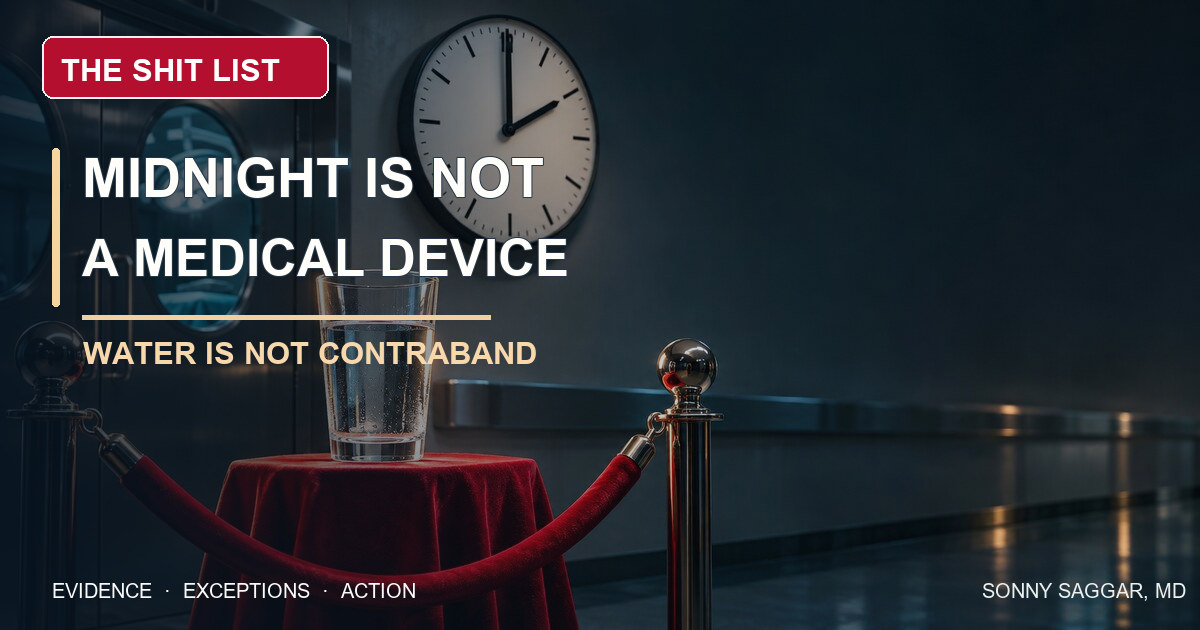
A hospital can perform microsurgery through a keyhole, map a beating heart in three dimensions, and still tell every afternoon patient to stop drinking at midnight.
2026-11-06
The Shit List
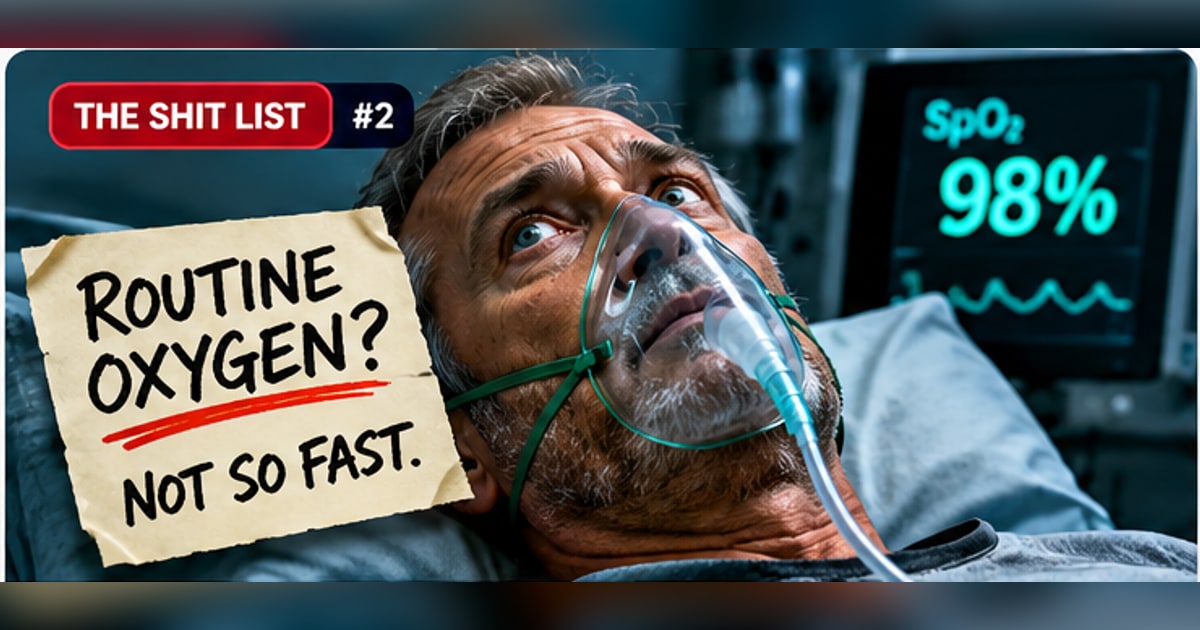
A heart attack feels like an oxygen problem. So we put oxygen on the patient. It is tidy, visible and emotionally satisfying. It is also usually the wrong reflex when the patient’s oxygen saturation is already 90% or higher.
2026-11-05
The Shit List
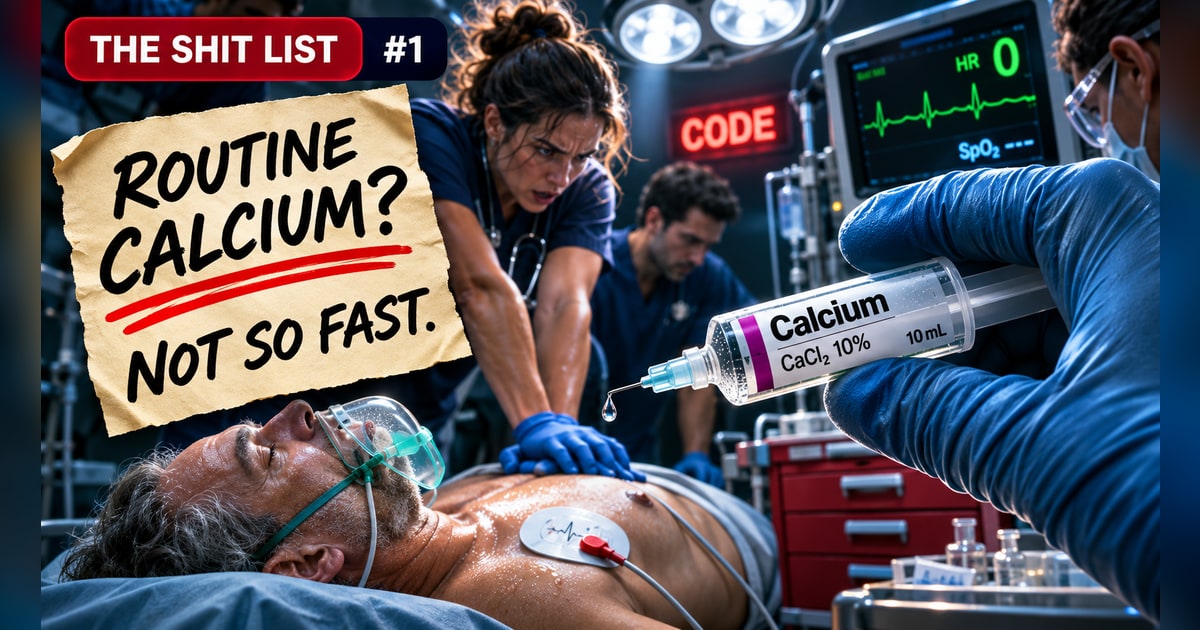
The trolley is well stocked. The evidence is rather less enthusiastic.
2026-11-05
About this series
Why are we still doing this? A drug can be useful in one setting, harmful in another, and expensive in both. A habit can outlive a trial. The question is not whether we can complain about medicine; it is whether the complaint changes anything.
The series investigates unnecessary doses, questionable clinical reflexes, outdated protocols, excessive testing, billing incentives and the gaps between professional confidence and evidence. Its recurring finish is always: What should we do instead?
This is analysis, not blanket advice to stop treatment. Every issue names the clinical exceptions and limits of the evidence.
Evidence & ActionSubscribe on Substack
How every issue earns publication
Primary research, named citations, competing findings, fair limitations, plain-English interpretation, and an actionable conclusion. A claim that fails checking is revised or removed, even when it would make an excellent headline.
Read our editorial standards and corrections policy
Read it. Test it. Discuss it.
Articles are one part of the New Physician ecosystem: the original written evidence, relevant existing video and audio, reader questions and practical advisory work. No automated playback, fake engagement or artificial audience growth.
Browse and search the complete article archive by topic, date or series