
$0 Fixes
The Thanksgiving Leftovers That Needed a Curfew
The most useful thing you can do after a holiday meal may be to put the food away before the conversation ends.
Sonny Saggar, MD · 2026-11-25
Research commentary, not medical advice. Discuss personal health decisions with a qualified clinician or pharmacist.
The Claim
Thanksgiving dinner tomorrow can become lunch on Friday. But the turkey, stuffing, gravy and other perishable dishes do not need to sit on the table until the last guest leaves. Refrigerating them promptly is a simple way to reduce foodborne illness risk. [1,2]
Why The Clock Matters
Many bacteria multiply rapidly between 40 and 140 degrees Fahrenheit. A kitchen counter is often comfortably inside that range. Food can become unsafe without an obvious change in its appearance. The clock starts when food leaves safe temperature control, not when the last person finishes eating. [2,3]
The Two-Hour Rule
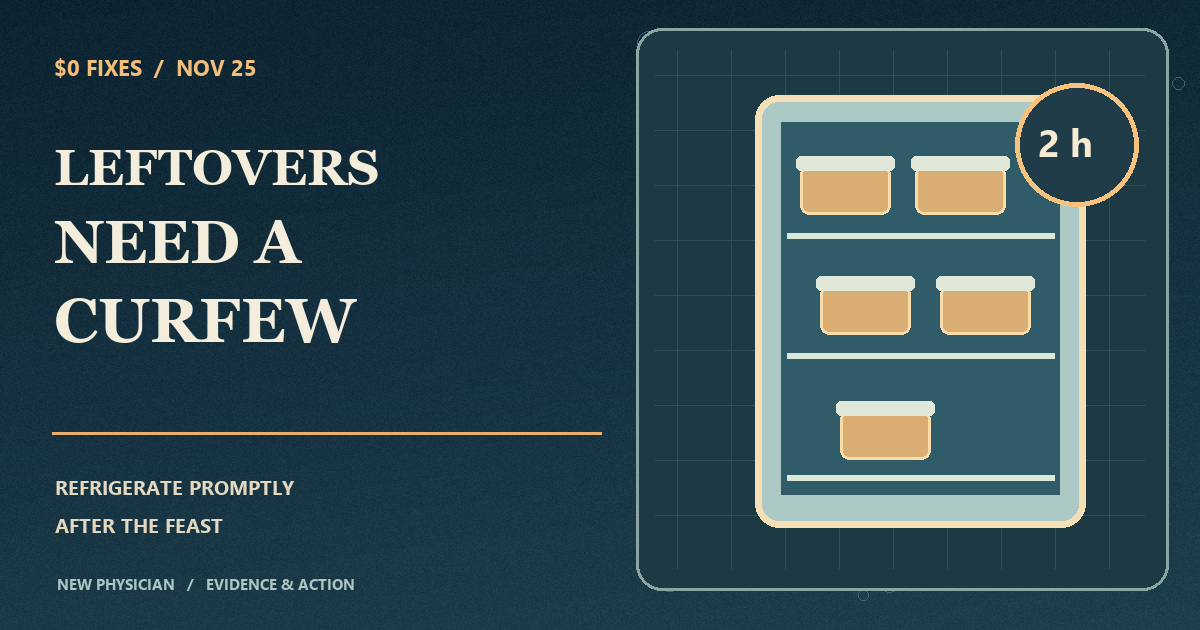
Put perishable leftovers in the refrigerator within two hours. If the surrounding temperature exceeds 90 degrees Fahrenheit, the limit is one hour. Discard food that has exceeded the relevant limit. Refrigerating it afterward is not a reset button. [1,2,3]
Smaller Is Smarter
Divide large quantities into shallow containers so they cool quickly. Use clean containers you already have. Refrigerate at 40 degrees Fahrenheit or below. Do not leave a deep pot on the counter waiting for it to become cold. Properly stored cooked leftovers generally keep for three to four days; freeze what you will not use within that window. [1,4,5]
The Exceptions
Food held continuously at safe temperatures is different from food sitting unprotected at room temperature. Hot holding at 140 degrees Fahrenheit or above and cold holding at 40 degrees Fahrenheit or below can keep food outside the danger zone. A thermometer is useful for verifying these temperatures. Pregnant people, young children, older adults and people with weakened immune systems are particularly vulnerable to foodborne infections. [2,3]
What To Do For $0
Set a timer on a phone when dinner is served. Before it expires, divide and refrigerate perishable leftovers. Label the containers with the date if possible. If sending guests home with food, account for travel time too and keep it safely chilled. Reheat properly stored leftovers to 165 degrees Fahrenheit before serving. [1,2,4]
When It Is Not Just A Bad Meal
Foodborne illness can cause cramps, diarrhea, vomiting or fever. Drink fluids if you can. Seek medical attention for bloody diarrhea, diarrhea lasting more than three days, fever above 102 degrees Fahrenheit, repeated vomiting that prevents drinking, or signs of dehydration such as little urine or dizziness. Pregnant people with fever and flu-like symptoms should contact a clinician. Severe illness, collapse or confusion requires urgent emergency assessment. [6]
Sources and receipts
- USDA: The Recipe for a Safe Thanksgiving — Source cited in the reviewed article
- FDA: Serving Up Safe Buffets — Source cited in the reviewed article
- USDA FSIS: What Is the Danger Zone? — Source cited in the reviewed article
- USDA FSIS: How Do I Handle Leftovers Safely? — Source cited in the reviewed article
- FoodSafety.gov: Cold Food Storage Chart — Source cited in the reviewed article
- CDC: Food Poisoning Symptoms — Source cited in the reviewed article
From the same professional problem-solving perspective: YouTube · Spotify · Substack.