
$0 Fixes
The Twenty Seconds That Could Save Thanksgiving Dinner
The most useful infection-control equipment in the kitchen may be the sink you already own.
Sonny Saggar, MD · 2026-11-24
Research commentary, not medical advice. Discuss personal health decisions with a qualified clinician or pharmacist.
The Claim
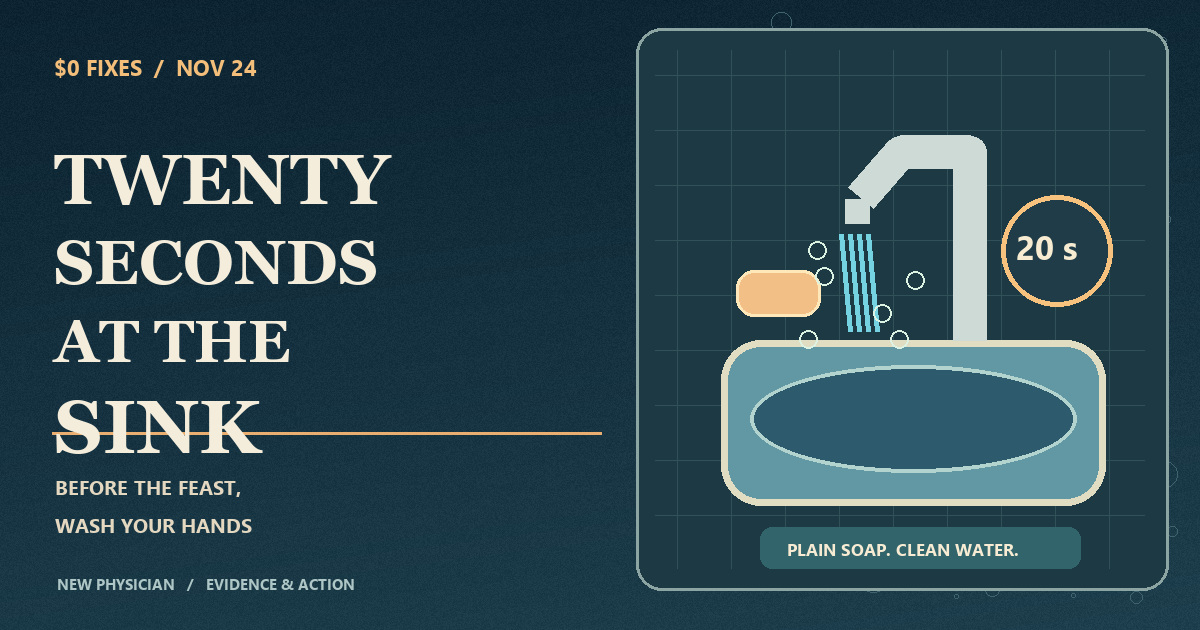
Before preparing a holiday meal, wash your hands with plain soap and clean running water. This is not a glamorous health intervention. It is an effective one. The CDC recommends scrubbing for at least 20 seconds, including the areas that a hurried splash tends to miss [1,2].
The Invisible Guest
Hands move between bathroom surfaces, door handles, food, phones and faces. They can carry organisms from one place to the next without looking dirty. Soap and friction help loosen material from the skin; rinsing carries it away. Ordinary soap is sufficient for routine community handwashing. Water does not need to be painfully hot [1,3].
What The Evidence Says
A Cochrane review of 29 studies found that interventions promoting handwashing probably reduced diarrheal episodes by around 30% among children in studied communities and childcare settings. The studies evaluated programs, not a single isolated handwashing event. The result is not a promise that any individual's risk falls by exactly 30%. WHO and UNICEF's 2025 community guidelines also support hand hygiene to prevent diarrheal and respiratory infections [4,5].
The Most Important Moments
Wash before preparing or eating food, after using the toilet or changing diapers, after handling raw meat, after coughing or blowing your nose, and after caring for someone with vomiting or diarrhea. In the kitchen, wash again when moving from raw ingredients to food that is ready to eat. Gloves do not remove the need for hand hygiene [1,5,6].
The Exceptions
If soap and clean water are unavailable, a hand sanitizer with at least 60% alcohol is a useful alternative in many circumstances. It does not work equally well against every organism. In particular, alcohol sanitizer alone is not a reliable substitute for soap and water against norovirus. Use the appropriate local guidance if the water supply is contaminated, and follow workplace-specific procedures in healthcare and food service [1,3,6].
What To Do For $0
Wet both hands, add ordinary soap, and rub the palms, backs, thumbs, fingertips and spaces between fingers for at least 20 seconds. Rinse under clean running water and dry with a clean towel or air dryer. Keep soap within reach of the sink. If you already have these supplies, the change costs no additional purchase. The point is not to buy a more impressive bottle. It is to use the one already there [1,3].
When Handwashing Is Not Enough
If you have vomiting or diarrhea that might be norovirus, do not prepare food for others or care for others until at least 48 hours after symptoms stop. Clean and disinfect contaminated surfaces appropriately. Seek medical help for inability to keep fluids down, very little urine, bloody stools or severe abdominal pain. Severe dehydration, collapse or confusion requires emergency assessment. Young children and older adults can become dehydrated more quickly [6,7].
The Fair Argument
Handwashing is a layer of protection, not a force field. Safe food temperatures, separation of raw and cooked food, clean water and staying away from the kitchen when ill still matter. Nor should access to soap and water be taken for granted. But when the sink and soap are already there, twenty deliberate seconds is a sensible investment [5,6].
Sources and receipts
- Centers for Disease Control and Prevention, About Handwashing — Source cited in the reviewed article
- Centers for Disease Control and Prevention, Handwashing Facts — Source cited in the reviewed article
- Centers for Disease Control and Prevention, Hand Hygiene Frequently Asked Questions — Source cited in the reviewed article
- Cochrane, Does encouraging people to wash their hands stop them having diarrhoea? — Source cited in the reviewed article
- World Health Organization and UNICEF, Guidelines on hand hygiene in community settings, 2025 — Source cited in the reviewed article
- Centers for Disease Control and Prevention, How to Prevent Norovirus — Source cited in the reviewed article
- Mayo Clinic, Norovirus infection: Symptoms and causes — Source cited in the reviewed article
From the same professional problem-solving perspective: YouTube · Spotify · Substack.