
$0 Fixes
The Crib That Needed Less, Not More
For infant sleep, removing things from a safe crib can be more useful than buying another product.
Sonny Saggar, MD · 2026-11-26
Research commentary, not medical advice. Discuss personal health decisions with a qualified clinician or pharmacist.
The Claim
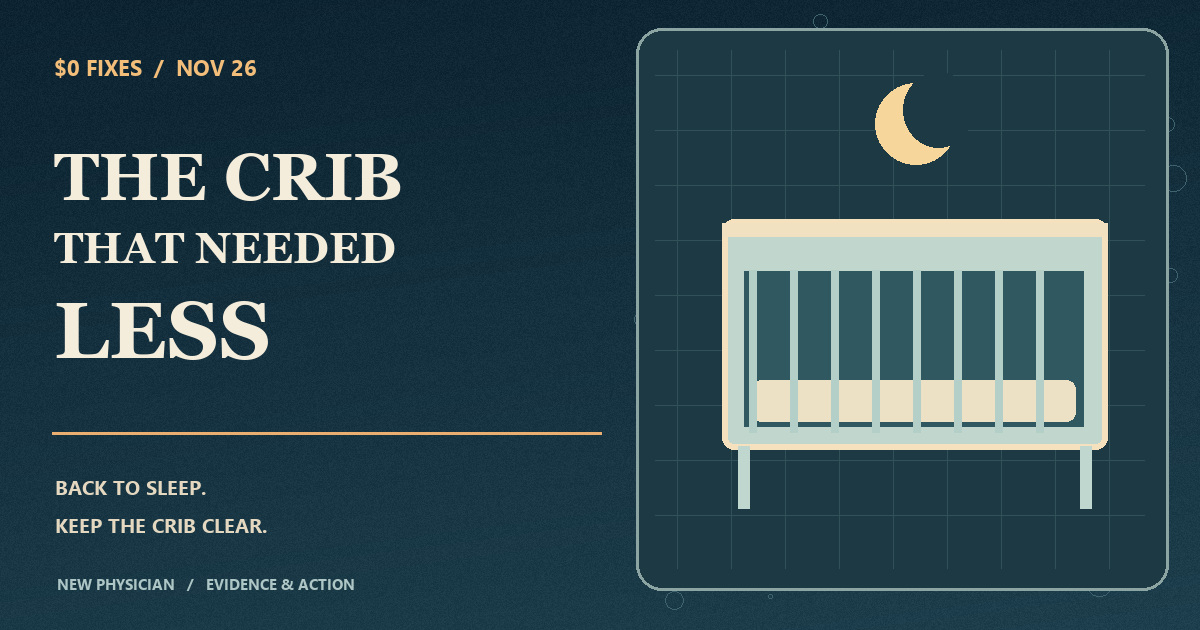
A beautifully decorated crib looks inviting to adults. A baby has a different set of requirements. The safest ordinary infant sleep space is remarkably uninteresting: a suitable firm, level mattress, its fitted sheet and no loose objects.
The Evidence
The American Academy of Pediatrics recommends placing infants on their backs for every sleep until their first birthday. It also recommends a firm, flat sleep surface and keeping soft objects and loose bedding out of the sleep area. These measures reduce the risk of sleep-related infant deaths, but cannot eliminate it. [1,2,3]
Why Less Is More
Pillows, soft blankets, toys and padded bumpers can obstruct breathing or trap a baby. An adult mattress or sofa is not an equivalent alternative. Use a crib, bassinet or play yard intended for infant sleep and compliant with current safety standards. [1,4,5]
The Exceptions
Most babies with reflux should also sleep on their backs. Ask the child's clinician about any rare medical circumstances requiring an individualized plan. When a baby independently rolls both ways, continue starting sleep on the back but they may remain in their chosen position. Stop swaddling when they begin trying to roll. Never use a positioner to restrain them. [1,3]
The Holiday Test
At a relative's house, check the sleep space before the baby needs a nap. If a child falls asleep in a swing or sitting device, move them to an appropriate flat sleep surface as soon as possible. A borrowed crib should be intact and checked for recalls. Room sharing without bed sharing is recommended, ideally for at least the first six months. [1,4,5]
When To Act
If an infant is unresponsive or not breathing normally, call 911 immediately and follow the dispatcher's CPR instructions. Safe sleep advice is prevention, not treatment for a breathing emergency.
What To Do For $0
If you already have a compliant sleep space, remove the extra bedding and toys, place the baby on their back, and make sure every caregiver knows the same plan. If you lack a safe crib, contact your pediatrician or local infant safety program for help obtaining one rather than improvising with a sofa or adult bed.
Sources and receipts
- AAP: Sleep-Related Infant Deaths, Updated 2022 Recommendations — Source cited in the reviewed article
- AAP: Evidence Base for 2022 Updated Recommendations for a Safe Infant Sleeping Environment — Source cited in the reviewed article
- NIH Safe to Sleep: Ways to Reduce Baby's Risk — Source cited in the reviewed article
- CDC: Providing Care for Babies to Sleep Safely — Source cited in the reviewed article
- CPSC: Whether At Home or Traveling for the Holidays, Keep Babies' Sleep Space Safe — Source cited in the reviewed article
From the same professional problem-solving perspective: YouTube · Spotify · Substack.