
$0 Fixes
Your Stomach Does Not Need to Sleep Upstairs
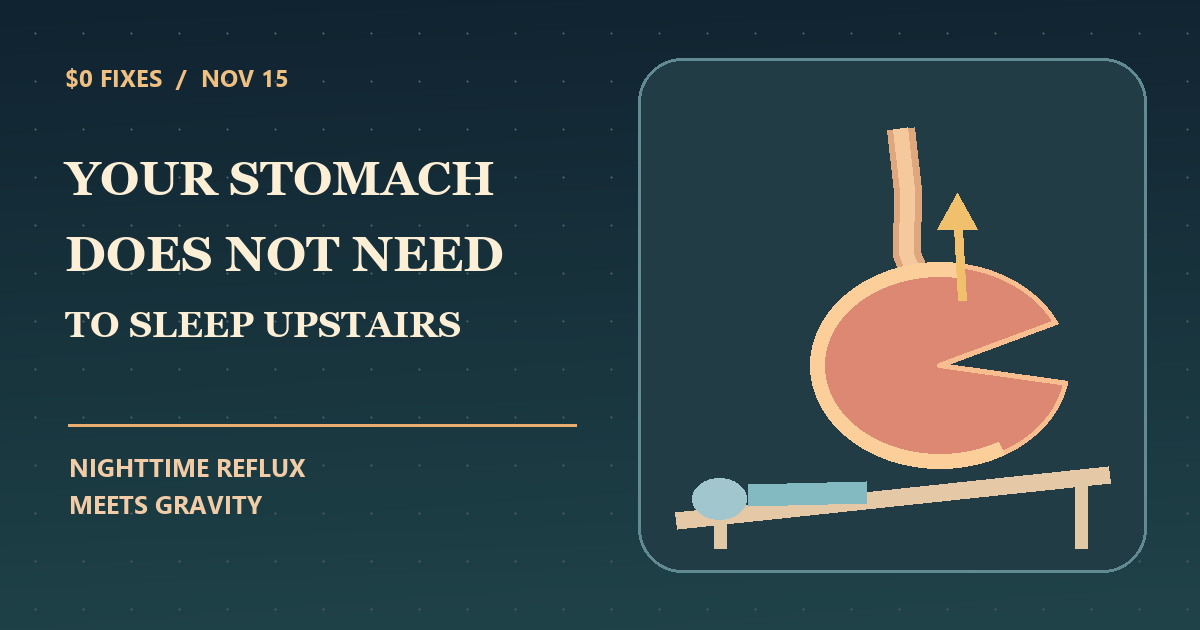
Nighttime heartburn sometimes improves when gravity joins the team. The surprisingly useful intervention is not an extra bedtime pill, but changing how and when you lie down.
Sonny Saggar, MD · 2026-11-16
The Claim
After dinner, the sofa beckons. You lie flat, and the burn travels up the chest. The next morning, someone recommends buying another product with a reassuring label. For adults with troublesome nighttime reflux, there is a less glamorous option: elevate the upper body and put a little more time between dinner and sleep. [1] [2]
The 2022 American College of Gastroenterology guideline suggests elevating the head of the bed for nighttime gastroesophageal reflux symptoms and avoiding meals within two to three hours of bedtime. Both are conditional recommendations based on low-certainty evidence, not promises of a cure. [1]
What The Studies Found
A 2021 systematic review found five controlled trials with 228 participants studying bed-head elevation. Four studies reporting symptoms favored elevation, but the trials were small, techniques varied and bias was a serious concern. The correct interpretation is that the approach may help, not that it works for everyone. [2]
In one randomized crossover trial of 39 treated adults analyzed, 27 had a meaningful improvement in reflux symptom scores during elevation versus 13 during the comparison period. The study was small, and bed-related discomfort or instability mattered to some participants. A low-cost intervention is not automatically risk-free. [3]
Why Gravity Matters
When you lie flat after a meal, stomach contents can more easily move toward the esophagus. Raising the head end of the bed can reduce overnight acid exposure for some people. Sleeping on the left side may also help, although evidence differs across interventions and individuals. A separate review of treatments for nocturnal reflux found that lifestyle studies were limited but physiologically reasonable. [4] [5]
An ordinary stack of pillows may bend the neck without elevating the torso adequately. A stable bed-head elevation or suitable wedge supporting the upper body is the intended intervention. There is no requirement to buy a branded device; the arrangement should be secure and comfortable. [1] [6]
The Catch
Reflux symptoms can have other causes, and not every burning chest sensation is reflux. A change in sleep posture does not repair erosive esophagitis, settle a bleeding ulcer or rule out cardiac disease. The AGA advises tailoring evaluation and treatment to the individual rather than imposing a single lifestyle prescription on everyone. [5]
Nor does an improvement justify suddenly stopping prescribed acid-suppressing treatment. People with significant esophagitis, other complications or long-term clinical indications may need medicines and follow-up even if the pillow arrangement helps. [1] [5]
The Exceptions
Seek emergency assessment for new, severe or unexplained chest pain, especially with pressure, shortness of breath, sweating, exertional symptoms or pain radiating to the arm or jaw. See a clinician promptly for difficulty or pain swallowing, persistent vomiting, unintentional weight loss, vomiting blood or black stools. These are not do-it-yourself reflux problems. [1] [7]
Anyone at risk of falling, anyone with mobility limitations, and people using unstable bed risers should not improvise an unsafe incline. Reflux in pregnancy, persistent symptoms, new symptoms later in life or treatment failure deserves individualized advice.
What To Do For $0
Tonight, try finishing food at least two to three hours before lying down. If nighttime reflux continues and elevation can be made secure, raise the head of the bed or use a firm existing wedge that supports the trunk; experiment gently with left-side sleeping if comfortable. Avoid piling up loose pillows or making a bed unstable. [1] [4] [6]
Keep a short symptom diary: when you ate, when you lay down, whether you elevated the upper body, and whether symptoms or waking improved. Discuss persistent problems, complications or uncertainty with a clinician. The goal is fewer symptoms and safer sleep, not winning an argument with gravity.
What Would Change The Verdict
Larger, well-conducted trials with patient-important outcomes could tell us which people benefit most, which elevation technique is tolerable and how durable the effects are. Today's evidence supports offering a practical option with limits, not claiming a universally effective remedy.
Sources and receipts
- [1] Katz PO et al. ACG Clinical Guideline: Diagnosis and Management of Gastroesophageal Reflux Disease. American Journal of Gastroenterology. 2022. — Source cited in the reviewed article
- [2] Albarqouni L et al. Head of bed elevation to relieve gastroesophageal reflux symptoms: a systematic review. BMC Family Practice. 2021. — Source cited in the reviewed article
- [3] Morales A et al. Impact of head of bed elevation in symptoms of patients with gastroesophageal reflux disease: randomized crossover study (IBELGA). 2020. — Source cited in the reviewed article
- [4] Schuitenmaker JM et al. Systematic review: Clinical effectiveness of interventions for the treatment of nocturnal gastroesophageal reflux. Neurogastroenterology & Motility. 2022. — Source cited in the reviewed article
- [5] Yadlapati R et al. AGA Clinical Practice Update on the Personalized Approach to the Evaluation and Management of GERD. Clinical Gastroenterology and Hepatology. 2022. — Source cited in the reviewed article
- [6] American College of Gastroenterology. Acid Reflux/GERD: eating and sleeping habits, including safe bed-head elevation. — Source cited in the reviewed article
- [7] National Institute of Diabetes and Digestive and Kidney Diseases. Symptoms and Causes of GER and GERD: warning signs and when to seek care. — Source cited in the reviewed article
From the same professional problem-solving perspective: YouTube · Spotify · Substack.