About GROUND
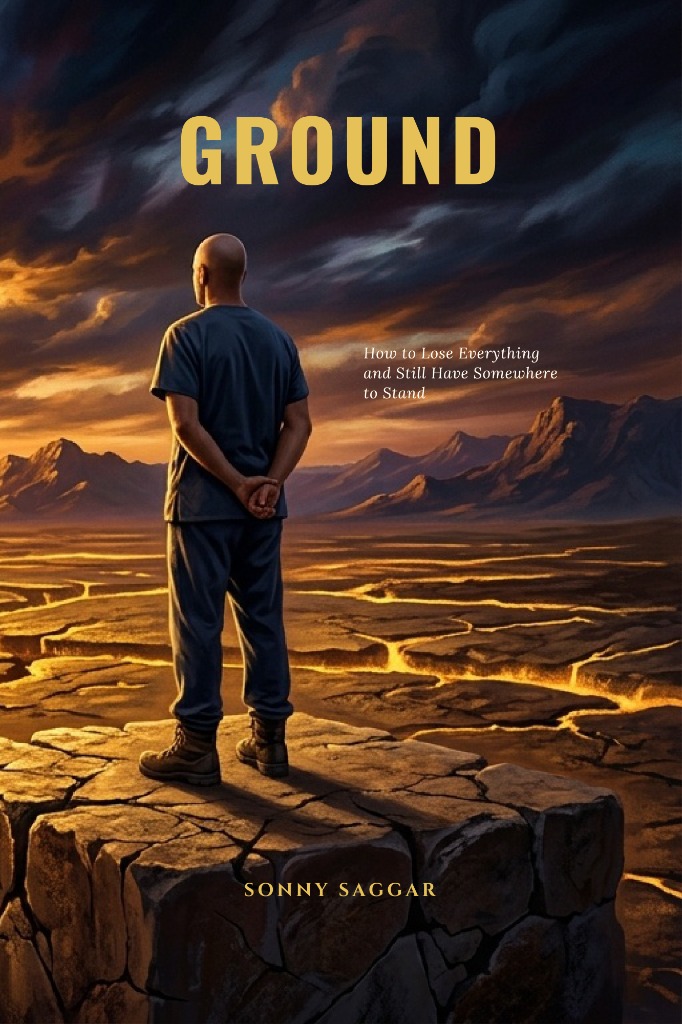
GROUND: How to Lose Everything and Still Have Somewhere to Stand is written from inside the experience of losing everything at once, not from a safe distance looking back. It's short, meant to be read in one sitting, closer to a long honest letter than a self help book.
Most books on resilience are written well after the fact, with the smoothing that hindsight provides. This one wasn't. It started by hand, in a federal prison camp, while a twenty five year medical career came apart on the outside. It doesn't offer easy comfort, and it has no patience for the idea that everything happens for a reason. What it offers is a way to stand when there's nothing solid left underfoot.
The book's central distinction is between losing things and being lost. You can't stop status, money, or freedom from being taken when the system moves against you. You can decide whether you lose your own direction along with them.
Book Details
- Format: Kindle, paperback, hardcover
- ASIN: B0H7M7TK1V
Why I Wrote GROUND by Hand in a Federal Prison Camp
I spent twenty five years practicing emergency medicine. People were glad to see me walk into a room. Then, in 2023, an indictment ended that. Arrested, sentenced, incarcerated, and the life I'd built was gone within the space of a single afternoon.
I began writing GROUND from inside a federal prison camp. No laptop, no quiet desk. A pen, paper, and the noise of a federal institution around me. I wrote by hand because that was what was allowed, and because it was the only tool I had left to hold onto my own mind while everything else came apart.
I wasn't writing because I had answers. I was asking a question. What is left of a person once the things that defined them are gone? No stethoscope, no license, no office, no routine that told me who I was. GROUND is that question, worked through in real time, under the pressure of confinement.
I finished it after my release from custody, with Thomas Webster's help shaping the raw material into something a reader could actually use. But the voice in it came from that camp, and I haven't tried to sand that down.
This isn't a book about bouncing back, and I don't use that phrase, because it implies you return to your old shape. You don't. There's no baseline left to bounce back to. GROUND is about building a new foundation out of whatever is left of your character, rather than waiting for a past that's gone.
I won't tell you everything happens for a reason. I don't believe it. That line gets said by people who haven't lost much, or who can't sit with the idea that suffering sometimes has no point behind it. What matters isn't why the floor gave way. It's where you choose to stand now that it has.
Here's what I will tell you. Your credentials, your bank account, your freedom, all of that can be taken by force. Your own stance toward what happened to you cannot. That's the line where the system's reach ends and yours begins.
GROUND was written for anyone standing in wreckage they didn't choose, whether that came from a courtroom, a divorce, or any other kind of collapse. My second book, THE ROAD, is now available. Where GROUND is about who you are while it happens, THE ROAD is the practical map of what actually happens, written for the person facing charges and for the family standing beside them. It includes a guest chapter by Thomas Webster, MD.
Sonny Saggar
About THE ROAD
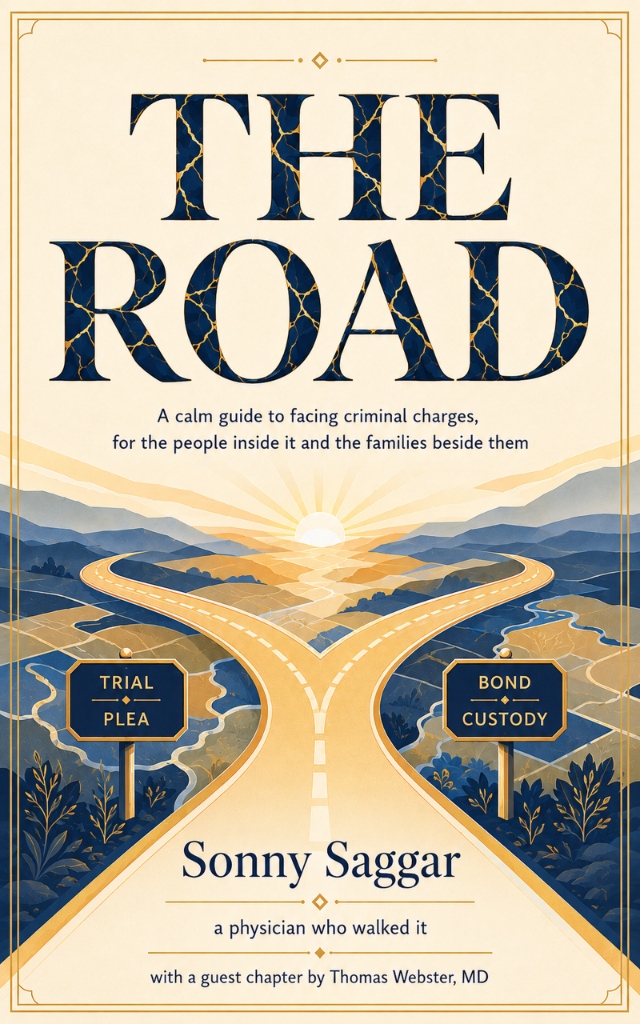
More than a million people face serious criminal charges in the United States each year. Bookstores are full of guides for surviving a shark attack or a snakebite. Almost nothing exists for this far more common emergency, and even less for the families standing beside the person charged.
THE ROAD walks the whole process in plain language: the first week after an indictment, what a defense lawyer actually handles and what falls outside that, the presentence report, how sentencing really works, what happens to a career or a license, and the return home after release. It covers state and federal cases both, because most people facing charges are in state court, and most books on this subject ignore them entirely.
The book includes a guest chapter from Thomas Webster, MD, on managing the chronic stress a case places on a family over months or years.
I pleaded guilty, and this book doesn't relitigate that. It isn't legal advice, and I'm not anyone's lawyer. It's the map I wish someone had handed me the day this started, for the person living through it and for the person who loves them.
Storefront Companion: Practical, plain-language legal checklists and case preparation workbooks referenced in the text can be accessed directly at THE ROAD Case Workbooks Storefront.
About CIRCLE
A book with no ladder in it.
There is no ladder. No one is above you. No one is beneath you. Everyone you have ever met, including the ones who hurt you, is a student mid-lesson in a school nobody graduates from.
Sonny Saggar was an Oxford student twice expelled, an emergency physician for thirty years, a businessman, a father, a federal prisoner. He began this book by hand, in a cell, at five in the morning, when everything he had used to measure himself was gone and every ranking he had ever believed in stopped working. What was left was a shape. Not a ladder. A circle. And a discovery: what saves us is not ascent but orientation.
CIRCLE is a short book meant to be kept close: why we grow at different speeds, why judgment costs the judge most, why the people who hurt us are struggling with their own arithmetic, and how to live among the other students without hatred and without ranking a single soul.
Read it in one sitting, or one chapter a night.
A circle has no top.
Book Details
- Format: Kindle, paperback, hardcover
- Release Date: Forthcoming
About THE ADAPTIVE COUPLE
How Two Changing People Stay in Love for a Lifetime
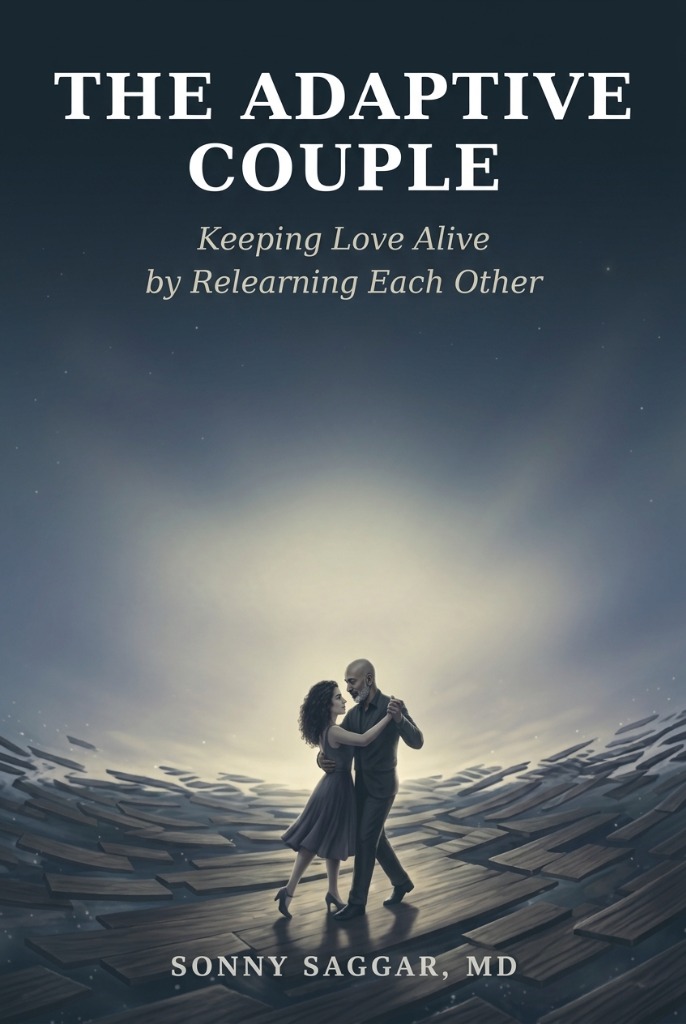
We often say that commitment means loving the same person for life. That is emotionally appealing and literally impossible. The person at twenty-eight is not identical to the person at forty-two. The body changes. Ambition changes. Confidence changes. Energy changes. Work, children, money, illness, grief, success, menopause, retirement, caregiving, faith, disappointment, and discovery change the conditions in which two people meet each other.
The deeper form of commitment may therefore be this: learning how to recognize and love the person your partner is becoming, while allowing that person to recognize and love the person you are becoming.
This book introduces the Adaptive Needle model to evaluate relationship arrangements. Roles between two people are sorted by preference, skill, and season instead of anatomy or conventions. What matters is not movement toward some predetermined center, but awareness, consent, protection, and revisability.
Book Details
- Format: Kindle, paperback, hardcover
- Release Date: Coming Soon (September 2026)
Research & Papers
Sonny Saggar's complete research catalog, including work on
institutional automaticity, healthcare enforcement, supervised
release, professional credentialing, and digital trust, is
maintained on the Research page: all fifteen SSRN papers,
organized by research theme, with filters and abstracts.